Linear Feet to Board Feet Calculator
Convert linear feet to board feet for trim, decking, tongue-and-groove flooring and dimensional lumber. Enter your total linear run, thickness and width to get exact board feet and linear feet per board foot.
Linear feet to board feet formula
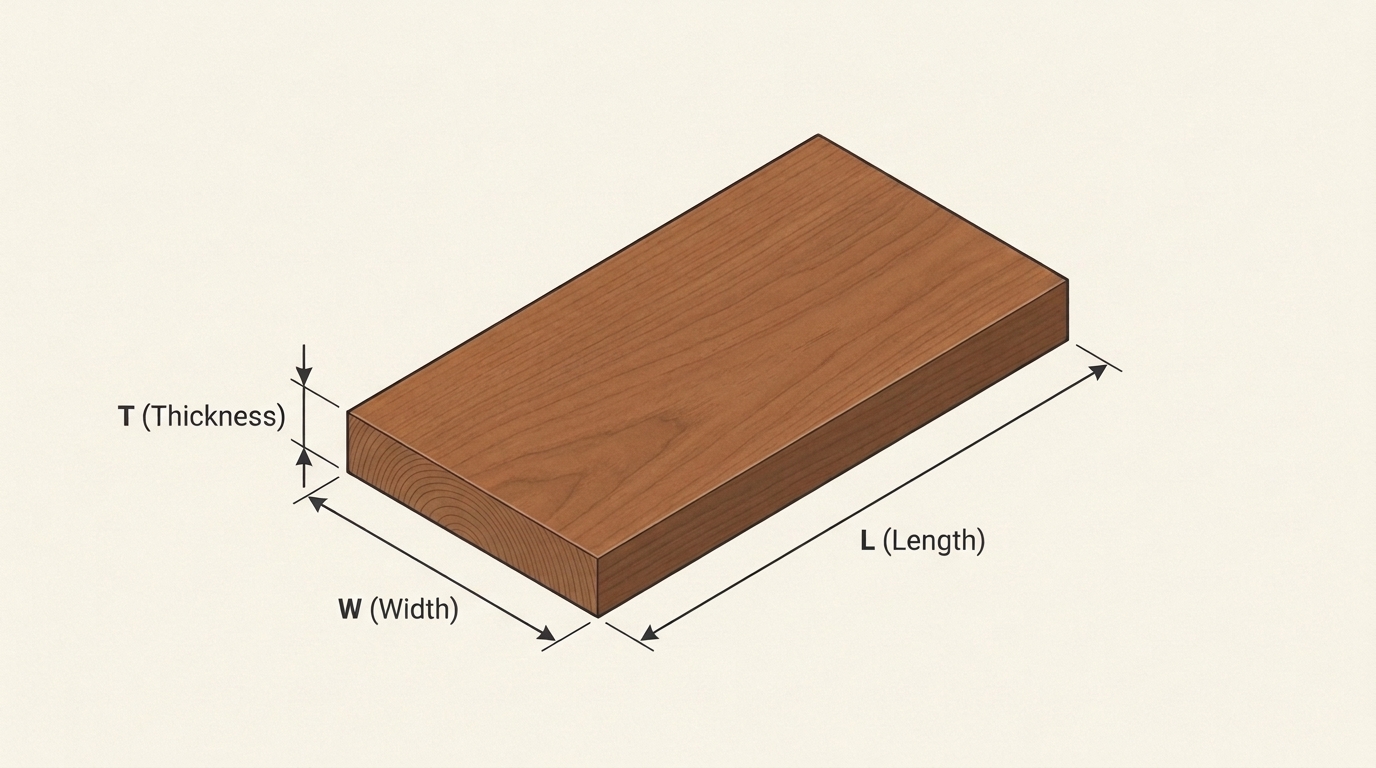
To go the other way — from board feet back to linear feet for ordering trim or siding — use LF = BF × 12 ÷ (T × W). Need to price a multi-row project with waste allowance and cost per board foot? Switch to our main board foot calculator or review the board feet formula guide.
Linear feet to board feet chart (per 100 linear ft)
Quick reference using nominal lumber sizes. Divide board feet by 100 to get the multiplier for a single linear foot.
| Lumber size | BF per 1 LF | BF per 100 LF | LF per 100 BF |
|---|---|---|---|
| 1×4 (nominal) | 0.333 | 33.33 | 300.00 |
| 1×6 (nominal) | 0.500 | 50.00 | 200.00 |
| 1×8 (nominal) | 0.667 | 66.67 | 150.00 |
| 1×12 (nominal) | 1.000 | 100.00 | 100.00 |
| 5/4×6 decking | 0.625 | 62.50 | 160.00 |
| 2×4 (nominal) | 0.667 | 66.67 | 150.00 |
| 2×6 (nominal) | 1.000 | 100.00 | 100.00 |
| 2×8 (nominal) | 1.333 | 133.33 | 75.00 |
| 2×10 (nominal) | 1.667 | 166.67 | 60.00 |
When lumber yards quote linear feet vs board feet
Decking, moulding, fascia, siding and surfaced trim of fixed width are usually sold by the linear foot because every piece shares the same profile. Rough hardwood, random-width stock and wholesale lumber loads are sold by the board foot so you pay for total wood volume regardless of board width.
When comparing two quotes — for example a millwork yard quoting linear feet and a hardwood dealer quoting board feet — convert both to board feet first, then add 10–15% waste for end cuts and matching. If you are milling your own logs first, estimate raw yield with the log board foot calculator.
Related lumber calculators
Board Foot Calculator
Multi-row board foot calculator with inch/metric units, quarter thickness, waste, price per BF, CSV, print and share link.
Log Board Foot Calculator
Compare Doyle, Scribner Decimal C and International 1/4-inch log rules with full log scale charts from 8 to 40 inches.
How to Calculate Board Feet
How to calculate board feet step by step: formula, worked examples, MBF conversion and quarter thickness chart.
Linear feet to board feet FAQ
How do I convert from a linear run to board volume?
Multiply length in feet by thickness in inches and width in inches, then divide by 12: BF = (LF × T × W) ÷ 12. For example, 100 ft of 1×6 stock equals (100 × 1 × 6) ÷ 12 = 50 BF.
What is the difference between running length and board volume?
Running length (LF) counts only the distance along a piece, ignoring width and thickness. Board volume (144 cubic inches per BF) reflects three-dimensional wood quantity, so wider or thicker stock holds more volume per foot.
How many running feet equal 1 BF?
Divide 12 by thickness × width in inches. For a 1×6, 1 BF equals 2 running feet; for a 2×4, 1 BF equals 1.5 running feet.
Should I enter nominal or surfaced dimensions?
Use nominal sizes (such as 1×6, 2×4 or 5/4×6) when checking lumber yard quotes, because dimensional stock is billed on nominal dimensions. Switch to actual planed dimensions only when estimating real wood weight.
How do I compare a per-foot quote against a per-BF quote?
Convert your total run into BF first, then divide the total price by total BF. For instance, 100 ft of 1×8 at $2.00 per foot ($200) equals 66.67 BF at $3.00 per BF.